
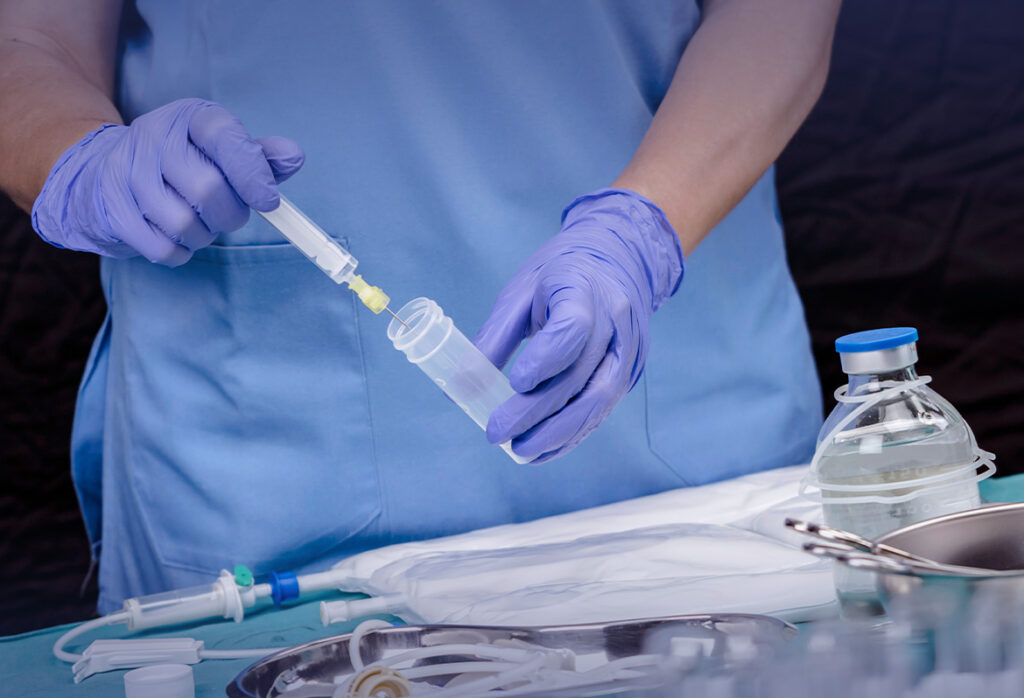
Parenteral nutrition is an essential practice in both hospital and home care settings, providing nutritional support for patients who, for various reasons, are unable to eat naturally or via enteral feeding.
It is a form of nutritional support that delivers all or part of the required nutrients directly into the bloodstream, bypassing the gastrointestinal tract. Parenteral nutrition is a life-saving therapy when the intestine cannot be used, is not functioning properly, or its use is contraindicated.
When and Why Parenteral Nutrition is Used
Parenteral nutrition is prescribed when the patient’s digestive system is unable to function properly or when it needs to be temporarily rested to support clinical recovery. It is indicated in the following situations:
- Severe gastrointestinal conditions, such as obstructions, fistulas, short bowel syndrome, dysmotility, or malabsorption
- Neurological disorders that impair swallowing or oral intake
- Hypercatabolic states caused by severe infections, trauma, or major surgery
- Oncological or degenerative diseases that lead to severe malnutrition
- Temporary pre- or post-operative conditions requiring nutritional support
Risks Associated with Parenteral Nutrition
Parenteral nutrition, while essential, carries certain risks that require the use of appropriate devices to minimise potential complications. These may include:
- Catheter-related infections
- Catheter occlusion
- Venous thrombosis
- Metabolic imbalances
- Hepatic and biliary complications
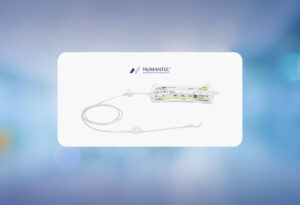
Preventing these issues largely depends on the quality of the devices used. The use of appropriate vascular access and safe catheter flushing systems can make a significant difference in the daily management of parenteral nutrition, both in hospital and home care settings
Numantec Group Devices for Parenteral Nutrition
The Numantec Group offers reliable solutions for the safe administration of parenteral nutrition.
The vascular access devices used for this therapy include:
- CVC
- PICC
- Implantable Ports
Central Venous Catheter: When Direct Access is Required
The CVC is a catheter inserted into a central vein (such as the internal jugular, subclavian, or femoral vein), with the tip positioned near the superior vena cava or in the right atrium.
It is used to deliver parenteral nutrition with high osmolarity and other irritant solutions that cannot be safely infused through peripheral veins.
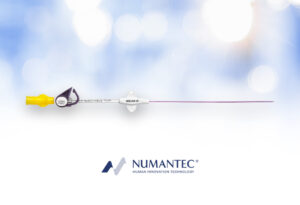
The Orion CVC is designed for short-term central access, typically for less than 30 days. Available in a range of sizes and lengths, it provides healthcare professionals with an immediate solution for various clinical needs.
Its thermo-reactive polyurethane construction softens after insertion, increasing patient comfort, while the presence of large lateral openings improves flow rates and reduces infusion time.
Numantec PICCs
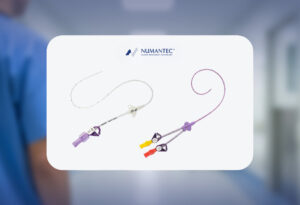
PICC lines provide central venous access via peripheral insertion.
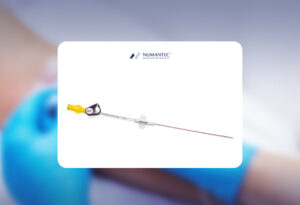
The Synergy line offers various configurations, consistently ensuring safety, user efficiency, and patient comfort.
These PICCs are suitable for the administration of multiple therapies, including parenteral nutrition. Their polyurethane construction and reverse taper technology help reduce post-insertion bleeding while maintaining excellent radiopacity.
Standard kits include components designed to maximise safety, such as tear-away sheaths, safety echogenic needles, and high-quality guidewires. The low-profile hub is specifically designed to minimise skin irritation and reduce bulk at the insertion site.
Synergy PICCs are available in a variety of configurations and French sizes.
Numantec Ports
Implantable ports are also an effective and practical solution for the long-term administration of parenteral nutrition. These devices consist of a subcutaneous reservoir connected to a central venous catheter, allowing repeated vascular access without the need for frequent peripheral vein punctures, significantly improving the patient’s quality of life. Additionally, being fully implanted, they reduce bacterial exposure compared to external CVCs. Infusion is typically performed using a Huber needle, which preserves the integrity of the port’s septum and minimises the risk of trauma and mechanical complications.
Numantec: Practical Solutions for Complication-Free Parenteral Nutrition
Parenteral nutrition is a life-saving therapy for patients in complex clinical conditions, but its effectiveness depends on a secure and well-structured system.
The Numantec Group offers a complete range of solutions designed to ensure therapeutic continuity, complication prevention, and simple, efficient management, both in hospital settings and at home.