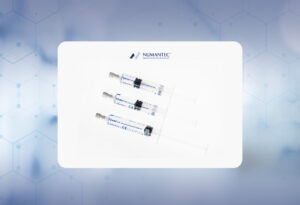

In healthcare settings, syringe selection does not depend solely on volume or the method of administration. In some cases, it is also essential to consider the light sensitivity of certain drugs, as this can affect their stability over time.
Amber syringes are designed precisely for this purpose: to protect photosensitive solutions from exposure to light during preparation, transport and administration, helping preserve their characteristics
What Are Amber Syringes?
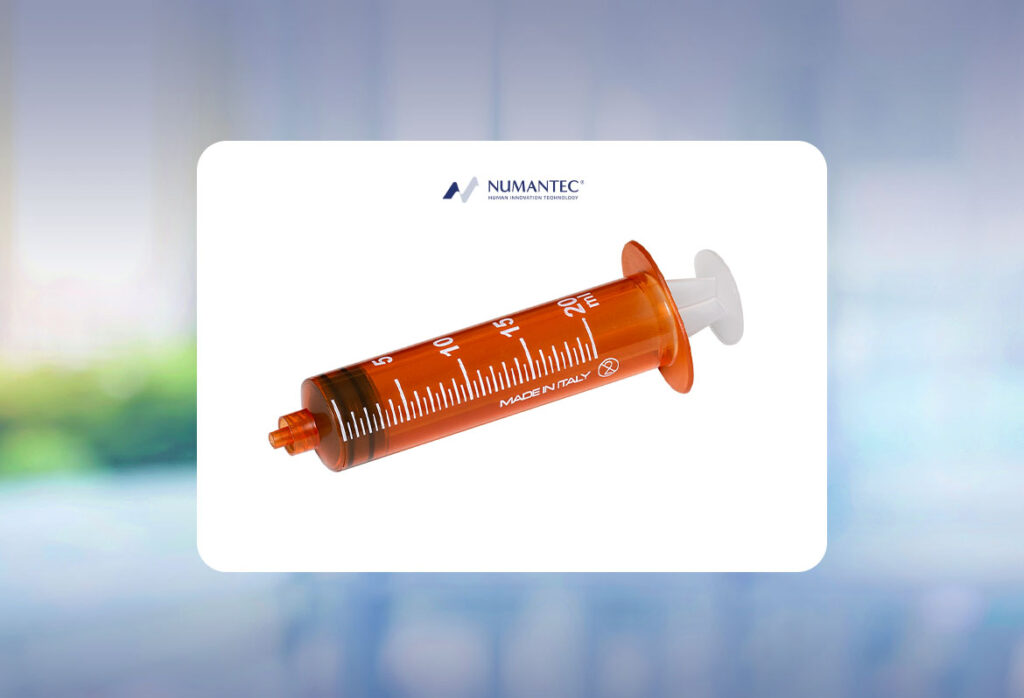
Amber syringes are devices made from amber-coloured material that limits the transmission of specific wavelengths of light, particularly those that may compromise the stability of certain active substances.
Their function is to provide additional protection when recommended in the product’s technical documentation.
When Are Amber Syringes Used?
Amber syringes are used whenever photosensitive solutions need to be handled or administered.
They may be used, for example, when preparing medicines that require protection from light during the time between preparation and administration, helping maintain the conditions specified by the manufacturer. The categories most frequently involved include certain antibiotics, anticancer drugs, anaesthetics, vitamins, nutritional preparations and other active substances with reduced photostability.
The actual need to use an amber syringe always depends on the instructions provided in the medicinal product documentation and on the protocols adopted by the healthcare facility.
Why Light Protection Is Important
Photodegradation begins when the molecules of the active substance or excipients absorb light radiation, particularly in the ultraviolet and visible regions of the spectrum. The absorbed energy can bring the molecule into an excited state and trigger photochemical reactions, such as oxidation, reduction, hydrolysis, isomerisation or the cleavage of specific chemical bonds.
These processes may lead to a reduction in the concentration of the active substance and the formation of degradation products, with possible changes in colour, clarity, pH or other properties of the solution. The rate of the reaction depends on the wavelength, light intensity, exposure time, composition of the preparation and the presence of oxygen or photosensitising substances.
Protection therefore does not mean indiscriminately blocking all light, but rather limiting the transmission of the wavelengths absorbed by the drug. Amber materials act as a selective optical barrier and help keep exposure within conditions compatible with the stability of the preparation. For this reason, photostability is a specific parameter in the stability studies for medicinal products required by ICH guidelines.
The Benefits of Amber Syringes
The use of amber syringes offers several operational benefits:
- protection of photosensitive medicines during preparation and administration;
- support in maintaining the stability of the active substance;
- reduced risk of alterations caused by light exposure;
- compliance with the manufacturer’s instructions and clinical protocols.
Choosing the most appropriate device helps make the administration process more suitable and compliant with the requirements established for each specific treatment.
Numantec Group Amber Syringes
The Numantec Group offers a range of amber syringes designed to meet the needs of healthcare professionals in the management of photosensitive medicines.
Developed to combine construction quality, reliability and ease of use, Numantec solutions support day-to-day preparation and administration activities, contributing to safer and more efficient management of treatments that require protection from light.