

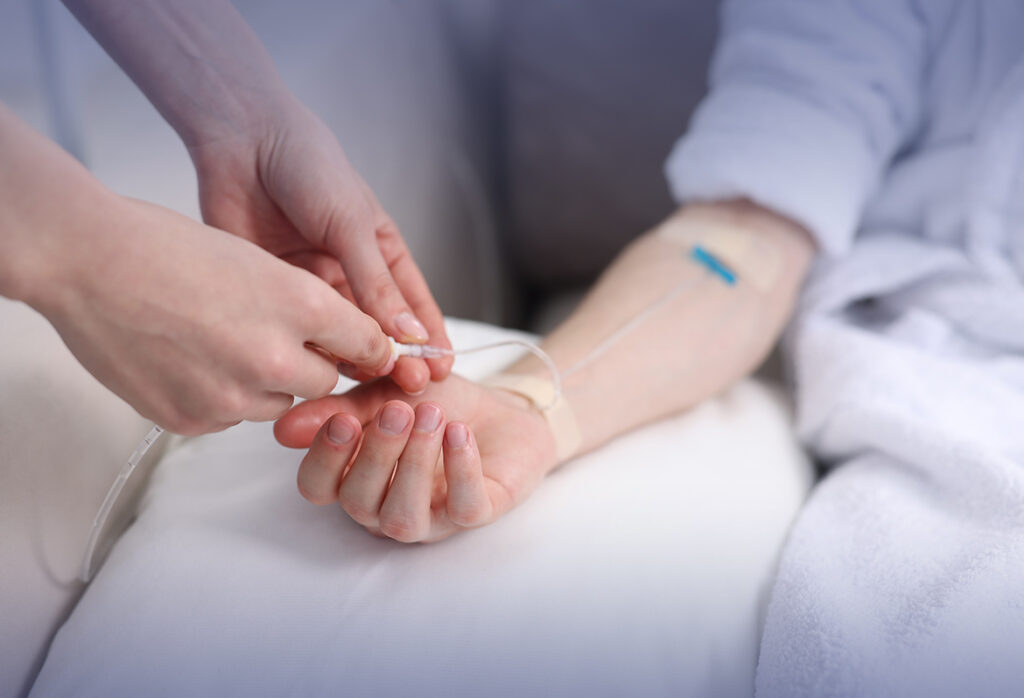
For older or frail patients, the need to travel regularly to a healthcare facility can be a barrier to continuity of care, not only because of mobility limitations but also because of the logistical challenges involved in each visit.
The evolution of home-based vascular access care offers a different approach: rather than requiring patients to travel to receive care, healthcare professionals can visit them at home, bringing into the community the expertise, technologies and procedures traditionally associated with the hospital setting.
This shift has implications for the way care is organised as a whole, particularly when treatment needs must be balanced with frailty or reduced independence.
The Home as Part of the Treatment Pathway
Chronological age alone does not determine whether home-based care is appropriate. Rather, the assessment is guided by the patient’s clinical and functional status, the complexity of the therapy, the condition of the patient’s venous system and the availability of a suitable environment in which procedures can be performed safely.
Consider, for example, a patient with severely limited mobility who requires prolonged infusion therapy. In such cases, repeated hospital visits may place a disproportionate burden on the patient relative to the care required. A structured home-based care service can enable vascular access assessment, device maintenance and, in selected cases, device insertion to be carried out directly in the patient’s home.
Another situation concerns patients with complex chronic conditions, for whom vascular access management forms part of an already multifaceted care programme. Integrating home-based services allows vascular access procedures to be coordinated with other aspects of care, avoiding the need for a separate care pathway for every catheter-related requirement.
Delivering care at home, however, does not reduce clinical complexity. Frail patients may have compromised venous access, an increased risk of complications or clinical conditions requiring particular attention. The suitability of home-based care must therefore be assessed on a case-by-case basis, rather than assuming that it is inherently preferable to hospital-based care.
A Coordinated Model of Care
Managing vascular access at home requires much more than simply having a healthcare professional available to perform a procedure. It also requires patient selection criteria, specialist expertise, appropriate devices, agreed protocols and effective coordination with the relevant healthcare facilities.
The initial assessment must also consider whether potential complications can be promptly identified and managed. In some circumstances, device insertion or replacement may be performed in community settings; in others, the patient’s clinical condition may require care in a hospital setting.
Caregivers, where present, also play an important role. With clear guidance and designated healthcare contacts, their involvement can support daily observation of the vascular access site and prompt reporting of any abnormalities.
For healthcare organisations, the development of community-based specialist teams also opens up new organisational opportunities: allocating care between hospital and home settings according to the complexity of the procedures, while reserving hospital resources for cases in which they are genuinely required.
Innovation today therefore extends beyond the introduction of more advanced devices to making specialist expertise and technologies accessible outside traditional care settings, with the aim of identifying the most appropriate care setting for each patient.