
Within the vascular access pathway, the post-insertion phase is just as important as device selection and insertion technique. Many complications develop during the day-to-day management of the infusion line and are often associated with repeated manipulation, inconsistent procedures or inadequate device maintenance.
For this reason, post-insertion care and maintenance protocols are considered essential for ensuring continuity of therapy and maintaining efficiency throughout the patient’s entire clinical pathway.
The Value of a Maintenance Protocol
The latest international recommendations emphasise the importance of standardising post-insertion management to reduce procedural variability and catheter-related complications.
The maintenance phase includes all activities required to preserve the functionality, stability and continuity of vascular access over time:
- inspection of the insertion site;
- correct securement of the device;
- management of connections;
- flushing procedures;
- scheduled replacement of components;
- use of dedicated sterile supplies.
A structured protocol helps make procedures more consistent and reproducible, while improving the overall organisation of clinical activities.
Securement, Dressing and Connection Management
One of the most critical aspects of post-insertion management is ensuring device stability and protecting the insertion site.
Inadequate securement may increase the risk of dislodgement, accidental manipulation and premature catheter replacement. Similarly, improperly managed dressings may compromise insertion site monitoring and contribute to complications over time.
For this reason, modern protocols incorporate sutureless securement systems, transparent dressings and dedicated devices designed to protect vascular connections.
Disinfection caps also play an important role in routine management, as they help protect needle-free connectors between uses, contributing to more consistent and controlled procedures.
The Role of Prefilled Syringes and Dedicated Sterile Supplies
Procedure standardisation also depends on the use of components specifically designed for vascular access maintenance.
Prefilled syringes help simplify flushing procedures, reduce procedural time and minimise the need for manual preparation of materials.
Alongside these components, the availability of dedicated sterile supplies enables procedures to be organised more efficiently while maintaining consistency across healthcare professionals and clinical departments.
The Impact on Continuity of Therapy and Team Efficiency
Structured post-insertion management directly contributes to continuity of therapy for the patient.
Reducing occlusions, dislodgements and device replacements helps minimise interruptions to treatment, preserve the patient’s venous access and improve the overall care experience.
At the same time, standardised protocols and dedicated kits make it possible to:
- improve adherence to procedures;
- reduce variability between healthcare professionals;
- optimise management times;
- make clinical activities more predictable and better organised.
Standardisation therefore supports both the patient and the clinical team.
Numantec Group Maintenance Kits
Numantec Maintenance Kits are designed to support the day-to-day management of vascular access through complete and consistent configurations.
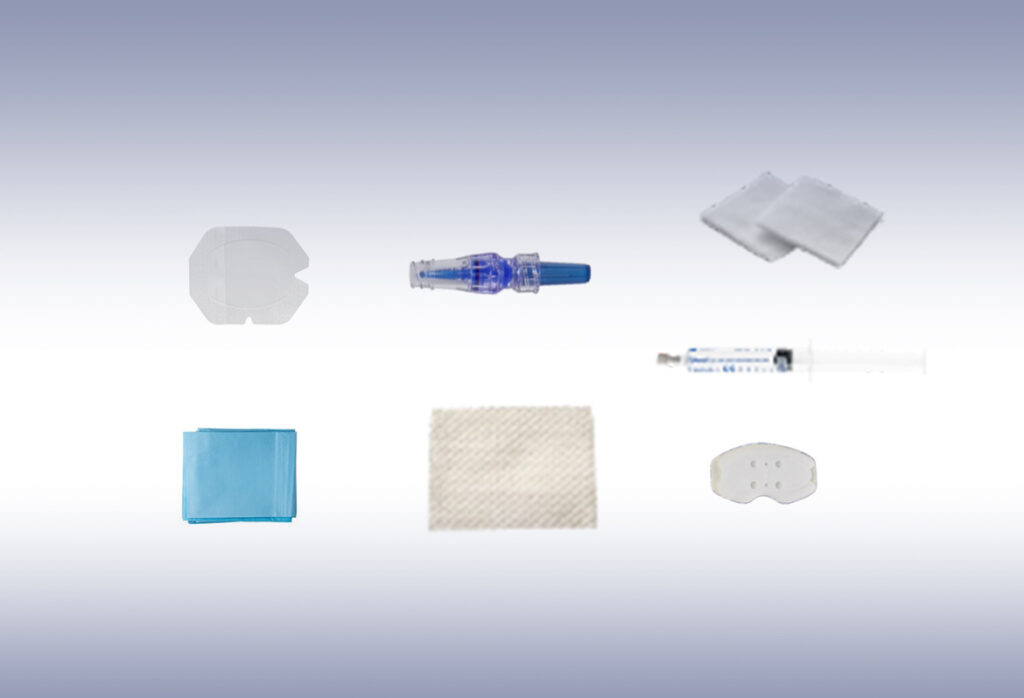
The kits include dedicated components for securement, dressing, connection management and maintenance procedures, helping to standardise the post-insertion process and improve the organisation of clinical activities.
The Group’s approach is aimed at promoting more structured vascular access management, with a focus on continuity of therapy, operational efficiency and quality of care throughout the entire clinical pathway.