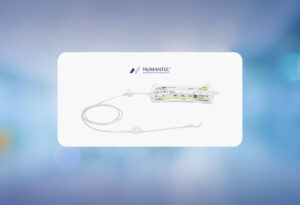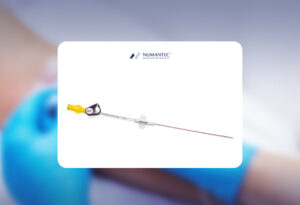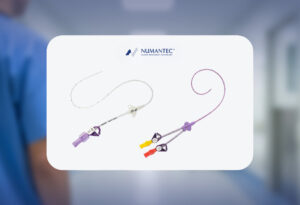

Peripheral venous catheters include devices with different lengths and characteristics, allowing access to be adapted to venous conditions, the expected duration of treatment and specific infusion requirements.
Between a short peripheral catheter and a 25 cm Midline, there are several options, from long peripheral cannulas to mini-Midlines. Having multiple configurations available allows healthcare professionals to identify a solution proportionate to the anatomical and clinical characteristics of each patient.
Peripheral Venous Catheters: Why Length Matters
Length is one of the parameters to consider when selecting peripheral venous catheters. It affects the ability to reach veins at different depths and the portion of the catheter that remains inside the vessel, with implications for access stability.
Peripheral cannulas measuring 6 and 8 cm make it possible to access veins located deeper than those generally reached with short PIVCs. Alongside these are mini-Midlines, devices positioned between the short peripheral catheter and the Midline, which is generally between 20 and 25 cm in length.
Progression in length expands the available options, but this does not mean that the longest device is necessarily the most appropriate. The choice must be based on the actual needs of the patient and the treatment.
The Mini-Midline Between Short PIVCs and Midlines
Among the different peripheral venous catheters, the mini-Midline, also referred to as an LPC (Long Peripheral Catheter), represents a particularly useful intermediate solution.
Its greater length compared with a short PIVC facilitates cannulation of superficial or deeper veins and keeps a larger portion of the catheter inside the vessel. It may be considered in patients with difficult venous access (DIVA) or when a more stable and longer-lasting peripheral access is required.
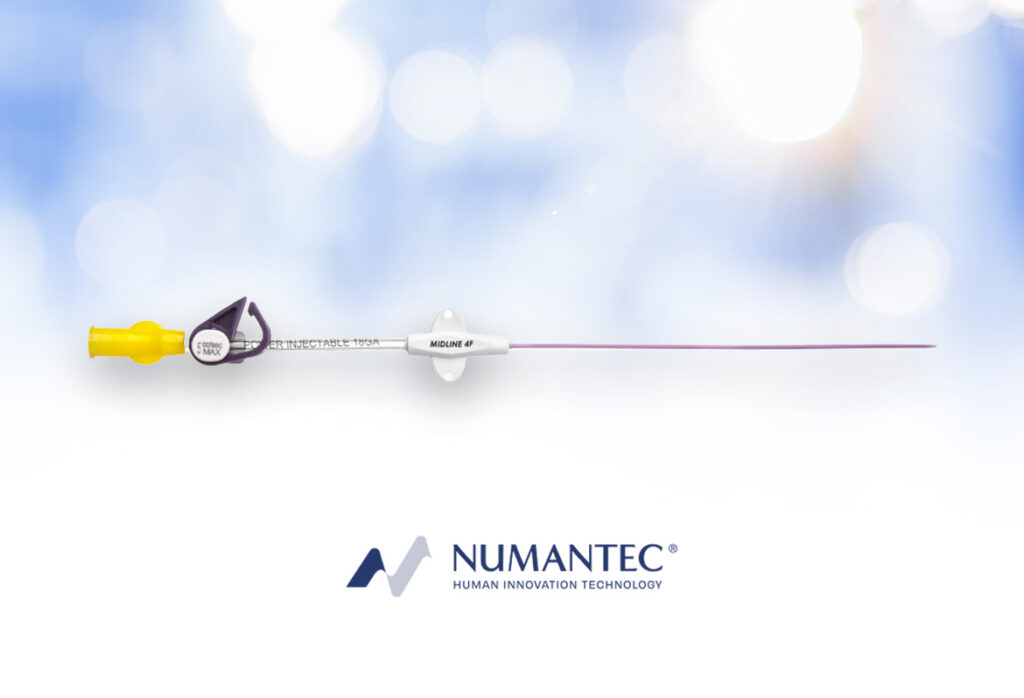
Within the Numantec range, Health Line ProV Midline ST is a mini-Midline intended for peripheral venous access for periods of less than 30 days. It is available in 3 Fr and 4 Fr sizes and in lengths of 6, 8 and 10 cm, allowing the configuration to be selected according to the size and location of the vessel.
The smooth cannula and atraumatic “V” tip are designed to facilitate insertion. ProV Midline ST is also power injectable, allowing it to be used when high-pressure injections are required.
From Mini-Midline to 25 cm Midline
When the characteristics of the access and the treatment pathway require a longer catheter, a traditional Midline may be selected.
Delta Midline completes the Numantec range with a 25 cm single-lumen peripheral venous catheter made of multilayer polyurethane, which is radiopaque, graduated and available in 3, 4 and 5 Fr sizes.
The option of distal trimming allows its length to be adapted to insertion requirements. Delta Midline is also power injectable and is supplied with different kit combinations, providing dedicated components for the different stages of the procedure.
Choosing the Right Peripheral Venous Catheter
The choice between long cannulas, mini-Midlines and Midlines should be based on a combined assessment of vessel characteristics and depth, expected duration of access, venous conditions and infusion requirements.
Having peripheral venous catheters available in different sizes and configurations allows vascular access management to be tailored more closely to each patient. This helps healthcare professionals select the device that is most consistent with the patient’s clinical condition and care requirements.