
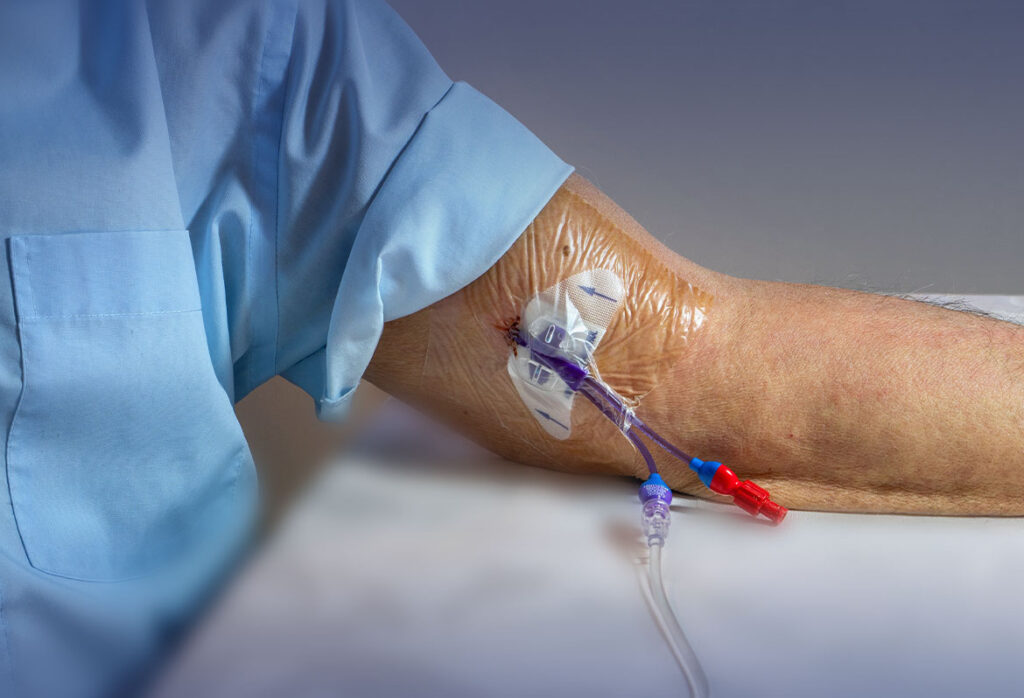
Despite technological advances and the ongoing evolution of clinical practice, vascular access failure continues to represent a significant challenge within patient care pathways. Occlusions, dislodgements, malpositioning, and other complications can interrupt therapy, require device replacement, and negatively affect continuity of care.
The Main Causes of Vascular Access Failure
In most cases, these complications are not caused by a single factor, but rather by a combination of initial device selection, insertion technique, and ongoing management over time.
Understanding the most common causes of vascular access failure is the first step toward effective prevention.
Occlusion
Catheter occlusion is one of the most common vascular access complications and may result from mechanical factors or inadequate line management.
Drug residue, precipitate formation, thrombotic buildup, or improper flushing procedures can compromise catheter patency, making infusion difficult or impossible.
A structured approach to flushing and line management protocols is essential to reducing the risk of occlusion.
Dislodgement
Dislodgement occurs when the catheter migrates from its original position, compromising the functionality of the vascular access device. This may be caused by inadequate securement, patient movement, or frequent manipulation of the line.
In addition to reducing the effectiveness of therapy, dislodgement increases the risk of further complications and often requires catheter repositioning or device replacement.
Malpositioning
Incorrect catheter tip positioning, often associated with suboptimal insertion technique or failure to verify final tip location, can directly affect infusion quality and overall device performance.
The use of ultrasound guidance and accurate tip confirmation procedures are key elements in reducing the risk of malpositioning.
Infection
Vascular access-related infections may be promoted by frequent device manipulation, inconsistent connector management, or poor adherence to established protocols.
A structured and standardized approach to daily vascular access care plays a key role in reducing infection risk and improving patient safety.
Thrombosis
Thrombosis is often associated with an inappropriate catheter-to-vein ratio or with patient-specific clinical conditions.
A catheter that is too large for the target vessel may impair blood flow and promote thrombus formation, ultimately compromising device functionality.
Careful pre-procedural planning and appropriate catheter size selection are therefore essential steps in thrombosis prevention.
Incorrect Device Selection
One of the most underestimated causes of vascular access failure is inappropriate device selection.
Therapy duration, type of infusate, patient condition, and flow requirements should all be carefully assessed from the outset.
Choosing a device that does not match the clinical need often leads to premature replacement, increased manipulation, and greater exposure to complications.
Lack of Process Standardization
The absence of standardized processes is a contributing factor that impacts all other vascular access-related complications. Variability between clinicians, inconsistent materials, and the lack of shared protocols make vascular access management less predictable and increase the likelihood of errors.
Standardization means transforming variable practices into structured and reproducible processes, improving consistency, operational efficiency, and overall quality of care.
How to Prevent Vascular Access Failure
Preventing vascular access failure requires an integrated approach that involves every stage of the clinical pathway:
- appropriate device selection;
- structured insertion techniques;
- consistent daily management;
- reduction of unnecessary manipulation;
- effective process organization.
Addressing these factors helps reduce complications, minimize the need for device replacement, and improve continuity of therapy, particularly when they are considered part of a comprehensive process capable of influencing long-term vascular access outcomes.
The Numantec Group is committed to supporting healthcare professionals in the selection and management of vascular access devices by providing solutions designed to promote a structured and consistent approach throughout the entire clinical pathway. Choosing the most appropriate device for each patient, adopting proper insertion techniques, and maintaining standardized protocols are essential to ensuring operational efficiency and high-quality patient care at every stage of treatment.