

In recent years, international vascular access guidelines have progressively shifted their focus from individual devices to a broader, more structured approach based on clinical criteria, appropriateness, and process organization.
The goal is to establish a care pathway that supports patients throughout the entire course of treatment, reducing complications and improving clinical outcomes.
Device Selection
One of the key principles emphasized by major international recommendations is the selection of the most appropriate device based on the clinical context.
This selection should take into account several factors, including the expected duration of therapy, the characteristics of the infusate, the condition of the venous system, and the need for specific flow rates or multiple lumens.
The principle of “the right device, in the right vessel, at the right time” should guide the initial decision-making process, helping to reduce the need for device replacement during treatment.
The Importance of Ultrasound Guidance
Guidelines highlight the central role of real-time ultrasound during the insertion phase. The use of ultrasound guidance enables more accurate identification of the most suitable vessel, assessment of its diameter and characteristics, a reduction in the number of insertion attempts, and an overall improvement in procedural accuracy.
Its systematic use helps make the insertion process more controlled and reproducible, regardless of the clinical setting.
Catheter-to-Vein Ratio
Maintaining an appropriate ratio between the catheter diameter and the vein diameter is a key criterion in insertion planning. Recommendations indicate that the catheter should remain within an appropriate proportion relative to the vessel, according to the so-called “one-third rule,” in order to preserve blood flow and reduce the risk of complications.
Post-Insertion Management
The phase following insertion is equally critical to treatment success.
Guidelines highlight the importance of:
- regular inspection of the insertion site;
- proper flushing procedures;
- appropriate management of vascular connections;
- timely removal of the device when no longer needed.
Process Standardization
Uniform procedures, consistent materials, and shared protocols enable the standardization of processes, reduce variability between operators and departments, and make clinical activities more efficient and predictable.
The use of procedural and management kits represents a practical tool for translating clinical practice into an organized and reproducible process.
Numantec Solutions for Vascular Access
In line with international guidelines, the Numantec Group offers a comprehensive vascular access portfolio designed to support all stages of the clinical pathway:
- peripheral venous access devices and closed-system solutions;
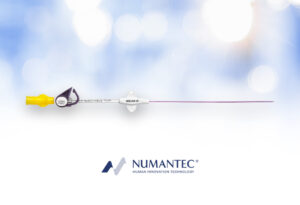
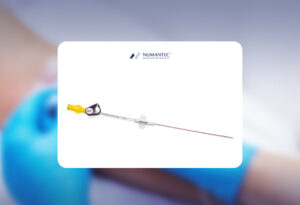
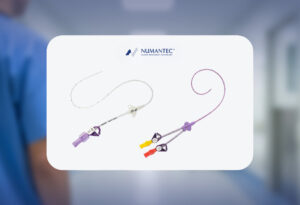
- Mini Midline, Midline, and PICC devices for different durations and clinical needs;
- filtration systems for infusion line management;
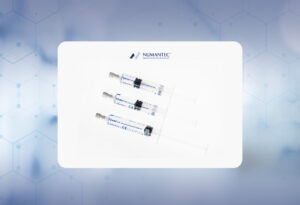
- pre-filled syringes and devices for daily clinical use;
- procedural and maintenance kits to support operational consistency.
This approach enables the integration of device selection, insertion technique, and management into a model focused on process efficiency and quality of care.